
Part 1: Why Women Can and Should Train Heavy
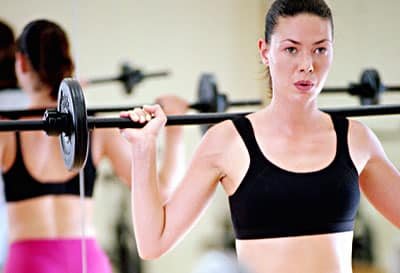
Why Women Can—and Should—Lift Heavy
One of the most persistent myths in fitness is the idea that women who lift heavy weights will suddenly become “bulky.”
Let’s clear that up immediately: that’s not how physiology works.
Women simply do not produce the level of testosterone required to build large amounts of muscle mass the way men can. What does happen when women strength train properly? They become stronger, leaner, more metabolically efficient, more resilient, and more capable for life.
And that’s exactly the goal.
What Does “Lifting Heavy” Actually Mean?
Before we define heavy lifting, let’s talk about the type of movements that matter most.
The greatest return in strength training comes from multi-joint (compound) exercises—movements that require multiple joints and muscle groups to work together at the same time.
Examples include:
- Squats
- Deadlifts
- Lunges
- Rows
- Chin-ups
- Presses
- Loaded carries
These movements demand coordination, stability, strength, and energy output far beyond what isolated exercises can provide.
Yes, bicep curls and leg extensions have their place.
But if your goal is strength, fat loss, improved body composition, and long-term health, compound lifts should be the foundation.
Why Heavy Compound Lifting Works So Well
1. Greater Fat Loss & Better Metabolic Health
Heavy multi-joint lifts recruit significantly more muscle mass than isolated exercises.
That matters because muscle is metabolically active tissue.
The more muscle you recruit during training, the greater the energy demand—and the more meaningful the metabolic response afterward.
Strength training also improves insulin sensitivity, which means your body becomes better at directing nutrients into muscle tissue instead of storing excess energy as body fat.
This is one reason properly designed resistance training can be so effective for body composition change.
Especially for women.
And yes—training your lower body matters.
Your legs and glutes contain some of the largest muscle groups in the body. Training them creates a bigger hormonal and metabolic response than endlessly doing upper-body “toning” exercises.
2. Real Strength for Real Life
Fitness should improve your life—not just your mirror.
Heavy lifting builds strength that directly transfers into everyday function:
- Picking up children or grandchildren
- Carrying groceries without effort
- Loading luggage for travel
- Rearranging furniture
- Assisting aging parents
- Getting off the floor with confidence
- Maintaining independence as you age
This is what functional training actually means.
Not balancing on unstable equipment doing circus tricks.
Real-world capability.
3. Stronger Bones as You Age
For women especially, bone density becomes increasingly important over time.
Resistance training—particularly heavier, load-bearing movements—creates the mechanical stress needed to stimulate bone remodeling and strengthen skeletal tissue.
Translation?
Strength training is one of the most effective long-term investments you can make against age-related bone loss.
4. Better Movement & Fewer Imbalances
Many women naturally develop movement imbalances—particularly between the front and back of the body.
Quad dominance.
Weak glutes.
Underdeveloped hamstrings.
Poor posterior chain strength.
Upper back weakness from desk posture.
Over time, these imbalances contribute to:
- Knee pain
- Low back discomfort
- Poor movement mechanics
- Increased injury risk
- Chronic tightness that stretching alone won’t fix
Heavy compound lifting helps restore balance by strengthening the muscles that often get neglected.
That means better movement, better posture, and fewer nagging issues.
So…What Counts as “Heavy”?
Heavy is relative.
What’s heavy for one person may be light for another.
For some women, heavy may mean a 20-pound goblet squat.
For others, it may mean deadlifting their bodyweight—or more.
The point is not comparing yourself.
The point is challenging your body enough to create adaptation.
Generally, meaningful strength work often falls in the range of 65–85% of your maximum capability, but determining that safely depends on training history, movement quality, and experience.
That’s why proper coaching matters.
Heavy should feel challenging.
Not reckless.
The Bigger Truth
At Body By Choice, we don’t believe women should train to be smaller.
We believe women should train to be stronger, more capable, and more resilient for the life they want to live.
Heavy lifting isn’t about becoming bulky.
It’s about:
- Building confidence
- Protecting independence
- Improving metabolism
- Supporting longevity
- Moving through life with strength instead of limitation
Because strength is not masculine.
Strength is human.
And every woman deserves it.
Ready To Elevate Your Health?
Partner with our expert coaches to build a personalized strategy for your longevity and performance goals.